

7 Signs Your Skin Barrier is Damaged (And the 3 Products That Will Repair It FAST)
What is Your Skin Barrier, Anyway?
Think of your skin barrier as the protective outer wall of your skin. Scientifically, it’s called the stratum corneum.
If your skin cells are the bricks, the natural fats (lipids, ceramides, cholesterol) are the mortar that holds them together.
A healthy skin barrier has two jobs:
- Keep the Good Stuff In: It locks in essential moisture and hydration.
- Keep the Bad Stuff Out: It protects your skin from germs, pollution, irritants, and allergens.
When this “wall” gets holes or cracks—usually from over-exfoliation, harsh products, or extreme weather—it leads to a state called a “damaged skin barrier” or “compromised skin barrier.”
7 Clear Signs Your Skin Barrier Is Damaged
Your skin is smart and will send you clear signals when its defenses are down. If you notice two or more of these signs suddenly appearing, you likely need to pause your routine and focus on skin barrier health.
1. Persistent Dryness and Tightness
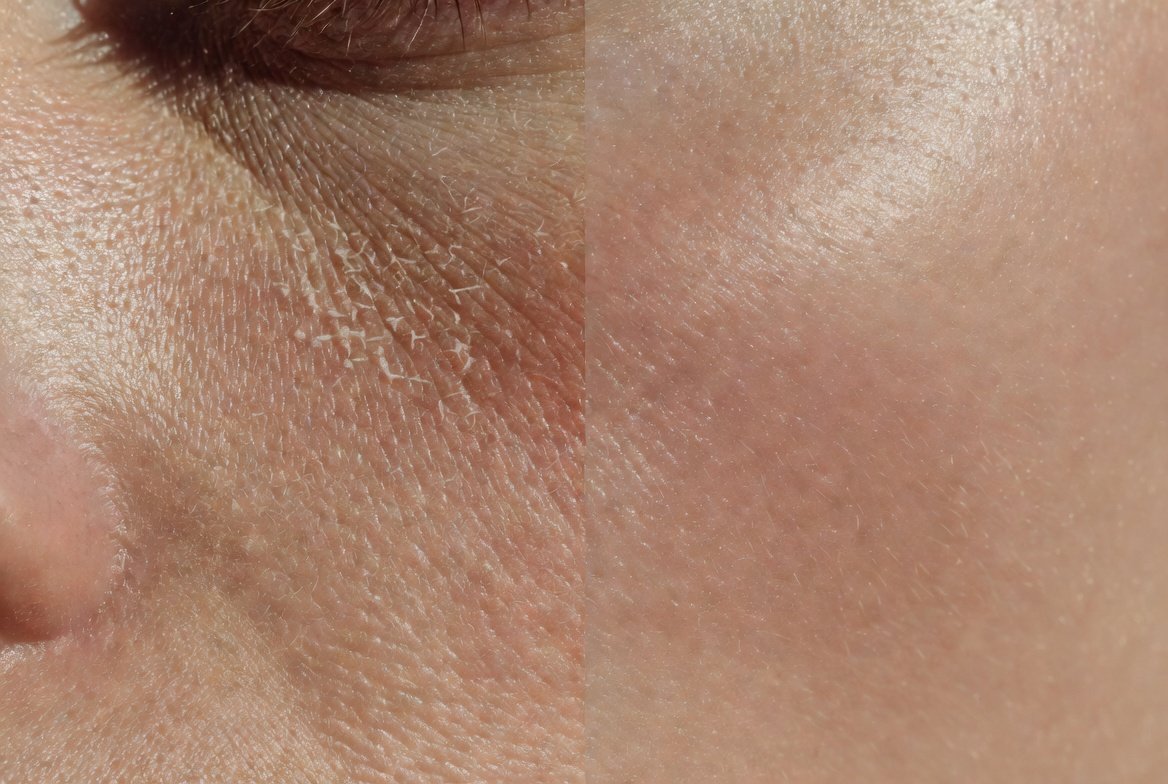
Your skin feels tight, especially after cleansing, or looks dull and flaky, no matter how much moisturizer you use. This is the most common sign. The damaged barrier can’t hold water, so moisture evaporates right out.
2. Sudden Sensitivity and Stinging
Products you used to love—like your favorite serum or toner—suddenly make your skin sting, burn, or feel uncomfortable. The protective wall is gone, allowing active ingredients to penetrate too deeply and trigger nerve endings.
3. Chronic Redness and Inflammation
Your skin looks blotchy, flushed, or red all the time. Since irritants and environmental stressors (like heat or cold wind) can get past the barrier, they trigger constant low-level inflammation.
4. Rough, Flaky, or Peeling Patches
You start seeing small, flaky patches, especially around the nose, mouth, or cheeks. This is a sign that the natural shedding process is disrupted, and dead, dry skin cells are sticking around.
5. Breakouts That Won’t Heal
A damaged barrier can actually cause acne. The skin loses moisture and can overcompensate by producing too much oil (sebum). This excess oil, combined with trapped bacteria and reduced defense, leads to clogged pores and stubborn breakouts.
6. Increased Itchiness and Discomfort
Your skin feels generally itchy or irritated throughout the day, even if you haven’t applied anything. This discomfort is caused by irritated nerve endings that are no longer properly shielded by the lipid layer.
7. Skincare Products Stop Working
When your barrier is compromised, your expensive serums and creams can’t be absorbed or function properly. It’s like pouring water into a cracked cup—it all leaks out. Your anti-aging or brightening products seem to have zero effect.
How Did This Happen? (The Main Culprits)
A damaged barrier is usually self-inflicted from trying to achieve “perfect” skin too fast.
- Over-Exfoliation: Using physical scrubs, Retinoids, AHAs (Glycolic Acid), or BHAs (Salicylic Acid) too often, or using too high a concentration.
- Harsh Cleansers: Using cleansers that are too foamy, contain high levels of soap, or strip your skin of its natural, necessary oils.
- Environmental Stress: Long, hot showers, extreme cold, or lack of sun protection (UV damage breaks down the barrier).
The 3 Products That Will Repair It FAST
The secret to quick repair is simplification and using ingredients that mimic the skin’s natural “mortar.” Your primary goal is to STOP using any harsh actives (like Retinol, Vitamin C, and all Acids) for at least two weeks.
Focus only on these three essential product categories:
1. Gentle, Non-Foaming Cleanser
When your barrier is weak, your cleanser should be the mildest product in your routine.
- What to Look For: Cream or Gel formulas that are fragrance-free and soap-free.
- Goal: To remove dirt without stripping the natural oils your barrier needs to rebuild.
2. The Barrier-Repair Serum (The Specialist)
This is where the heavy lifting happens. Look for serums that deliver intense hydration and soothing properties.
- Key Ingredients:
- Niacinamide (Vitamin B3): Soothes redness, evens skin tone, and helps strengthen the barrier function.
- Hyaluronic Acid: A powerful humectant that attracts and locks deep hydration into the skin.
- Centella Asiatica (Cica): A popular herbal ingredient known for its immediate calming and anti-inflammatory effects.
3. The Essential Restorative Moisturizer (The Mortar)
A strong moisturizer is the most critical step to patch the “holes” in your wall.
- Key Ingredients:
- Ceramides: These are the main lipid components of the skin barrier. Applying them directly helps replenish the depleted “mortar.” Look for products with a 3:1:1 ratio of Ceramides, Cholesterol, and Fatty Acids.
- Glycerin / Squalane: Emollients and humectants that provide a comfortable, protective seal to prevent water loss (TEWL).
- Oats or Panthenol (Vitamin B5): Known for quickly soothing irritation and itching.
| Step | Morning | Evening |
| 1. | Gentle Cleanser (Optional – just rinse with cool water if skin is very red) | Gentle Cleanser |
| 2. | Barrier-Repair Serum | Barrier-Repair Serum |
| 3. | Restorative Moisturizer | Restorative Moisturizer (Apply a thicker layer) |
| 4. | SPF 30+ (MANDATORY) | (Skip) |
Remember: Consistency and simplicity are key. Your skin needs time to heal. Stick to this gentle routine for 10–14 days, and you will notice a significant return to Skin Barrier Health and a comfortable, happy glow.